A car accident can leave you with more questions than answers. Between medical treatment, insurance paperwork, vehicle repairs, and time away from work, it is not always clear what happens next or how the Alaska car accident claim process unfolds.
We built this guide at Crowson Law Group around the decisions people face in the days and weeks after a collision. Those decisions shape how an insurance company evaluates a claim and whether important evidence still exists later.
It explains how car accident claims work in Alaska, from the first steps after a crash through settlement negotiations and, when necessary, litigation. You will learn how Alaska's fault laws affect claims, what to do after a car accident in Alaska, and why some cases resolve quickly while others take considerably longer.
If you would rather talk it through than read it, call 907-777-7777 for a free case review.
What Should You Do After a Car Accident in Alaska?
The first hours after a collision affect far more than your immediate safety. What you do next shapes your medical record, the evidence that survives, and how the insurance company later evaluates your claim.
Move to a Safe Location
If the vehicles can be moved safely, get them out of traffic to reduce the risk of another collision. Check yourself and others for injuries, and call 911 if anyone is hurt or if emergency assistance is needed.
Do not treat the first day after a crash as the final word on whether you were hurt. Injuries are sometimes identified at a later appointment, and the record of that visit is what ties the injury to the collision.
Seek Medical Attention as Soon as Possible
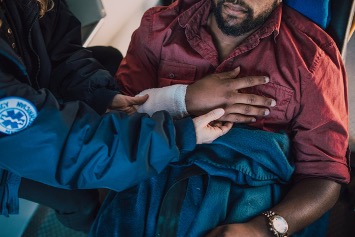
Getting seen promptly creates a dated, objective record. Emergency room records, urgent care visits, diagnostic records, and follow-up appointments are what document the connection between the collision and the treatment that followed. Gaps in that record are the first thing an adjuster looks for.
Report the Accident
Alaska requires a crash report when there is injury, death, or apparent property damage of $2,000 or more. If a peace officer investigates the crash, no separate report is needed. If no officer responds, you file it yourself with the DMV within 10 days. Police officers responding to the scene may prepare an accident report documenting the drivers involved, witness statements, roadway conditions, and their initial observations.
Request a copy of the report once it is available. It often carries details you will need during the insurance claim.
Exchange Information With the Other Driver
Collect basic information from every driver involved in the collision, including:
- Full name and contact information
- Driver's license number
- Insurance company and policy number
- Vehicle registration information
- License plate number
If there are people who observed what happened, ask for their names and contact information as well. Independent witnesses can sometimes provide details that neither driver remembers clearly.
Document the Accident Scene

Photographs and videos can preserve details that disappear once the vehicles are moved and the roadway is cleared. If it is safe to do so, document:
- Vehicle damage from several angles
- The position of the vehicles
- Road conditions and traffic signs
- Skid marks or debris
- Weather and visibility conditions
- Any visible injuries
These images may help explain how the collision occurred if questions arise later.
Notify Your Insurance Company
Most insurance policies require policyholders to report incidents within a reasonable period. When reporting the collision, provide accurate factual information without guessing about fault or speculating about injuries that are still being evaluated.
The other driver's insurance company may also contact you shortly after the crash. Before providing a detailed recorded statement or accepting a settlement offer, it helps to understand where your injuries stand and what the claim process may involve.
Keep Every Record Related to the Accident
Good documentation makes it easier to understand both the financial and personal impact of a collision. Consider keeping copies of:
- Medical records and bills
- Prescription receipts
- Vehicle repair estimates
- Rental car expenses
- Insurance correspondence
- Pay records showing missed work
- Notes on how the injury has affected your daily routine
These records help create a complete picture of how the accident affected your life and may become valuable as your claim progresses.
Steps in a Car Accident Claim in Alaska
An Alaska car accident claim generally follows five stages: medical treatment, claim filing, the insurance company's investigation, settlement negotiations, and, when necessary, litigation. Knowing how the Alaska car accident claim steps fit together helps you set realistic expectations.
| Stage | What Happens | Why It Matters |
| 1. Medical Treatment | You receive medical care, follow treatment recommendations, and your injuries are documented over time. | Medical records establish the nature and scope of your injuries and often become one of the most significant factors in evaluating your claim. |
| 2. Claim Filing | A claim or demand is submitted to the at-fault driver's insurance company explaining how the crash occurred, the injuries sustained, and the compensation being sought. | This formally begins the claims process and provides the insurer with the information needed to open its investigation. |
| 3. Insurance Company Investigation | The insurer reviews the police report, medical records, witness statements, photographs, vehicle damage, and other available evidence. It may also request additional documentation or clarification. | The insurance company uses this investigation to determine fault, assess the claimed damages, and decide how much it believes the claim is worth. |
| 4. Settlement Negotiation | After completing its review, the insurer may make an offer, request additional information, dispute certain damages, or deny the claim. Both sides negotiate in an effort to reach an agreement. | Many claims are resolved during this stage without the need to file a lawsuit, although negotiations may continue for weeks or months, depending on the complexity of the case. |
| 5. Litigation (If Necessary) | If negotiations do not produce a fair resolution, a lawsuit may be filed. The case then moves through discovery, which is the formal exchange of evidence and sworn questioning between the parties, and often through mediation, where a neutral third party helps both sides try to settle before trial. | Litigation adds additional procedures and timelines, but it also provides a formal process for resolving disputes when settlement negotiations reach an impasse. |
Car accident claims in Alaska are built on establishing that another driver's negligence caused the crash, then documenting the losses that resulted. This means proving what the at-fault driver did wrong, whether that was following too closely, running a red light, or driving distracted, and connecting that conduct directly to the injuries and damages being claimed.
Most claims proceed against the at-fault driver's liability insurance policy, which covers injuries and property damage the driver causes to others. When the at-fault driver has no insurance or when their policy is not large enough to cover the full extent of the injuries, the claim may also involve the injured person's own uninsured or underinsured motorist coverage, which functions as a separate claim with its own negotiation process.
Fault does not need to be entirely one-sided for a claim to succeed. Alaska allows recovery even when the injured person shares some responsibility, so these claims are rarely all-or-nothing.
If you are unsure which stage your own claim has reached, call us at 907-777-7777 and we will walk you through it.
What Are Alaska's Car Insurance Requirements?
Alaska requires every driver to carry liability insurance meeting the state's minimum limits. Those policies pay for injuries and property damage the policyholder causes, but the minimums often fall short of what a serious collision costs. Knowing how the coverages work tells you which policies may apply to your crash.
Alaska sets its mandatory minimum liability limits at Alaska Statute 28.22.101. Drivers must carry at least:
| Required Coverage | Minimum Limit | What It Covers |
| Bodily Injury Liability | $50,000 per person | Injuries suffered by one person in an accident you caused. |
| Bodily Injury Liability | $100,000 per accident | Total bodily injury coverage available when multiple people are injured in the same crash. |
| Property Damage Liability | $25,000 per accident | Damage to another person's vehicle or other property resulting from the collision. |
These limits satisfy Alaska car insurance requirements, but they may not come close to covering the costs of a serious accident. A collision that results in extended treatment or lasting limitations can generate medical expenses well above the required minimum coverage. When multiple people are injured, the available insurance must also be divided among all eligible claimants, which can further reduce the amount available to each person.
What Happens If the Other Driver Does Not Have Enough Insurance?
Even when another driver carries the required minimum coverage, their policy may not fully compensate everyone affected by the crash. Once the policy limits are exhausted, the remaining losses may not be covered unless another source of insurance is available.
For that reason, many Alaska drivers purchase uninsured motorist (UM) and underinsured motorist (UIM) coverage as part of their own auto insurance policy.
| Coverage Type | When It Applies |
| Uninsured Motorist (UM) | The at-fault driver without liability insurance or one who cannot be identified, such as in some hit-and-run collisions. |
| Underinsured Motorist (UIM) | The at-fault driver has insurance, but the available policy limits are insufficient to cover the full amount of your damages. |
Many people do not realize they carry UM/UIM coverage until they read their policy after a crash. Check your declarations page before assuming there is nothing available.
Insurance coverage does more than decide who pays. Insurers identify every policy that may apply early on, which shapes how the case is investigated and negotiated. Recovery sometimes involves several policies at once, including the at-fault driver's liability coverage, your own UM/UIM coverage, medical payments coverage, or a commercial policy when a business-owned vehicle is involved.
How Does Alaska's Comparative Fault Rule Affect a Claim?
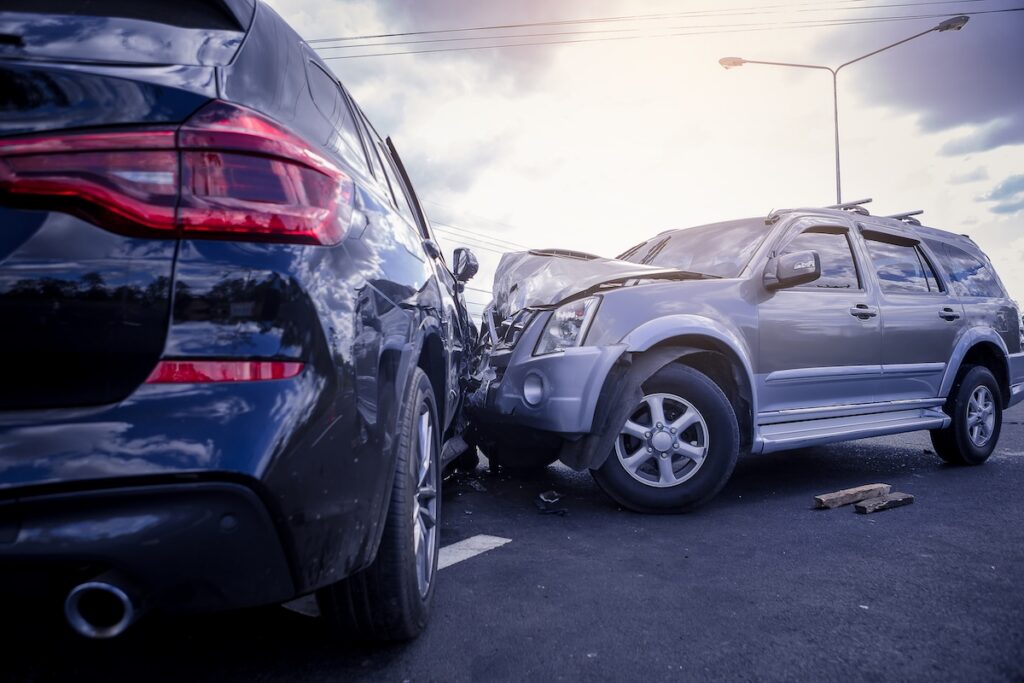
Alaska uses a pure comparative fault system under Alaska Statute 09.17.060, which means an injured person may still obtain recovery even if they share some responsibility for causing the accident. Instead of completely barring recovery, Alaska reduces the amount awarded by the percentage of fault assigned to the injured person.
Your ability to recover does not disappear because an insurer says you contributed to the crash. A driver found 20% responsible would generally recover 80% of their awarded damages.
For example, imagine you are injured in a collision where another driver runs a red light and hits your vehicle. The other driver argues that you were partially responsible because one of your brake lights was not working at the time of the crash. After reviewing the evidence, a jury determines that the other driver was 90% responsible and you were 10% responsible.
If your total damages are $50,000, your recovery would be reduced by your 10% share of fault:
| Total Damages | Your Assigned Fault | Reduction | Final Recovery |
| $50,000 | 10% | $5,000 | $45,000 |
Insurers look closely for any fact that shifts responsibility away from their insured driver, even when that driver plainly caused the crash. Comparative fault arguments may involve issues such as:
- Whether you were following traffic rules
- Whether your vehicle had mechanical problems
- Whether road conditions affected your ability to respond
- Whether your actions contributed to the severity of the collision or injuries
Even a small shift in those percentages changes what an insurer pays. Fault is determined by the evidence available, not simply by what each driver says happened. Important evidence may include photographs from the accident scene, witness statements, police reports, vehicle damage assessments, traffic camera footage, and medical documentation.
If an insurer has already told you that you share fault, we can review the evidence behind that number before you respond.
Evidence That Supports an Alaska Car Accident Claim

Strong Alaska car accident claims rest on a combination of physical, medical, and testimonial evidence gathered as early as possible after the crash. Insurance companies build their position based on what the file contains, so gaps in documentation tend to become gaps in the settlement offer.
- Police reports document the crash, including the officer's initial fault assessment and any citations issued at the scene. They carry weight with adjusters, though they are not the final word on fault and are not always admissible in court.
- Medical records connect specific injuries to the crash and document the treatment required, which directly supports the value of the claim.
- Photographs and video of vehicle damage, road conditions, and visible injuries capture details that fade or disappear once vehicles are repaired and injuries heal.
- Witness statements offer an independent account of what happened, which carries weight when fault is disputed.
- Financial records, including pay stubs and medical bills, document the economic losses tied to the crash.
Evidence that insurers commonly dispute includes the necessity of certain treatments, whether an earlier medical history accounts for part of the claim, and whether a gap in treatment suggests the injury was not as serious as claimed.
What clients often misunderstand about evidence is how quickly it can disappear. Vehicle damage gets repaired within weeks, dashcam footage may be overwritten within days if not saved separately, and a witness who saw the crash clearly at the time may struggle to recall it accurately months later under sworn questioning. Treating evidence collection as a priority in the first several days after a crash, rather than something to handle later, may have more impact on the eventual outcome.
Settlement vs. Trial: What Is the Difference?
Most Alaska car accident claims resolve through settlement rather than trial. A settlement is a negotiated agreement with the insurer that closes the claim without court involvement. A trial means presenting evidence to a judge or jury after a lawsuit has been filed.
| Factor | Settlement | Trial |
| Timeline | A settlement may resolve within months, depending on the complexity of the claim, medical treatment, and negotiations. | A trial can take a year or longer because of court scheduling, discovery, depositions, motions, and trial preparation. |
| Outcome | Both sides agree to a specific amount that resolves the claim. | A judge or jury decides whether the injured person should recover and, if so, the amount of damages. |
| Cost | Generally involves fewer expenses because it avoids many court procedures and trial-related preparation. | Usually involves higher costs due to litigation expenses, retained witness testimony, depositions, court filings, and trial preparation. |
| Certainty | The parties know the settlement amount once an agreement is reached. | The outcome is less predictable because the final decision rests with a judge or jury. |
| Public Record | Settlement discussions and agreements are generally private. | Court filings and proceedings become part of the public record. |
Settlement offers certainty and a faster resolution, which matters when medical bills are due. Trial becomes the realistic path when an insurer refuses a fair amount despite strong evidence, or when fault stays disputed. Most cases that go this far still settle before the trial date arrives.
FAQs: Alaska Car Accident Claim Process
Here are answers to some of the most common questions people ask us about the Alaska car accident claim process.
What if the other driver's insurance company denies my claim?
A denial is not necessarily the final word, since insurers sometimes deny claims that are later resolved through further negotiation or litigation. Ask for the stated reason in writing. We can review that reason, gather the evidence that answers it, and tell you honestly whether the denial is likely to hold up.
Can I still file a claim if I did not seek treatment right away?
Yes. A claim is not tied to how quickly you were seen, though a gap gives the insurer a reason to question whether the injury came from the crash. Get seen once you decide to, be ready to explain any delay plainly, and in most cases that settles the point.
What if I was a passenger rather than a driver?
Passengers may file against one or both drivers' insurance, depending on who was at fault. Passengers generally have a more direct path to recovery because they rarely carry any share of fault for the crash. We can identify which policies apply and which one to claim against first.
How long do I have to file a car accident lawsuit in Alaska?
Two years from the date the claim accrues, under Alaska Statute 09.10.070. That deadline applies to the lawsuit, not the insurance claim, so a case still in negotiation can run out of time. Claims involving a government entity often carry a much shorter written notice deadline.
Does it matter if I was partly at fault for the crash?
It affects the amount, not your right to bring a claim. Alaska uses pure comparative fault under Alaska Statute 09.17.060, so your recovery is reduced by your share of responsibility and is never barred by it. Even a driver found mostly at fault keeps a proportional claim.
[/rio_callout_block]
Consult Crowson Law Group Today

If you have questions about your next steps, talk to an Alaska injury attorney who can apply this process to your own facts. Every claim turns on its own evidence, and the answers that matter are the ones tied to your crash.
Crowson Law Group began on the other side of these files. Our founder, James Crowson, spent the early part of his career defending insurance companies before moving to representing injured people. That background shapes how we read an adjuster's file, what we document early, and where a claim tends to stall.
We have handled personal injury claims across Alaska since 2011, from Anchorage and Wasilla to the Mat-Su Valley and the more remote parts of the state. We answer calls 24 hours a day, we will travel to you if getting to us is difficult, and our clients follow their case in real time through our client portal, My Crowson Case.
Call 907-777-7777 for a free case review, or reach us by text if that is easier. We will listen and try to help even if we are unable to take on your case. Consultations are free, and we are glad to point you in the right direction either way.
[/rio_callout_block]