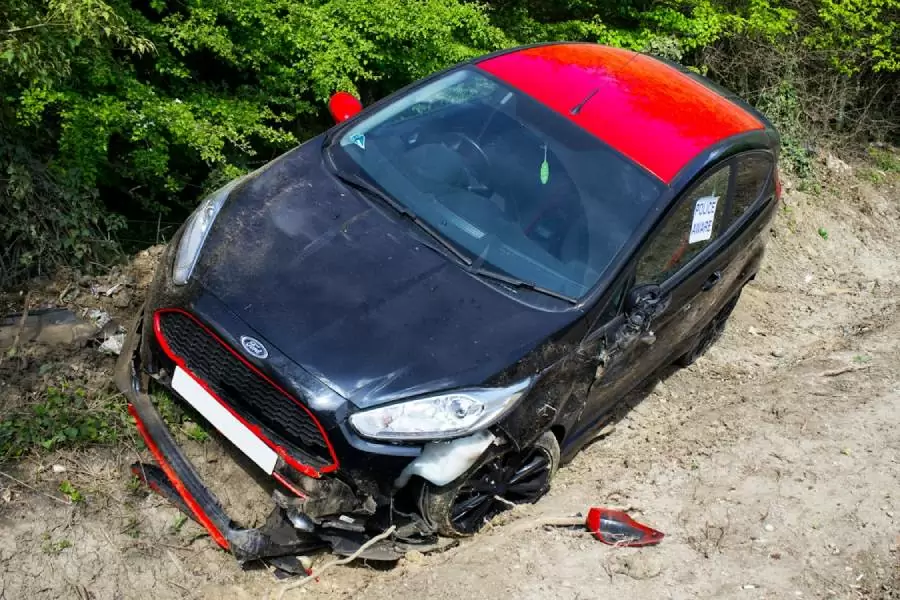
Even a minor car accident, which did not result in any injuries, can be a shocking and disorienting experience. Understanding your legal obligations in the immediate aftermath is essential to safeguard your rights and ensure that you comply with state law. This guide gives a detailed overview of what every driver needs to understand about handling a non-injury car accident in Alaska.
You have legal responsibilities under Alaska law, even when a collision appears minor and no one is injured. These duties are the initial measure in protecting your interests. If you have to go through the intricacies of a property damage claim, a non-injury car accident lawyer can provide the necessary advice throughout the process. The first steps you take at the scene are crucial and precondition a successful resolution.
The seconds after a crash are critical. You should not drive away after an accident, but stop at the scene and give the other driver your name, address, and vehicle registration number. It is also strongly advisable that you get their insurance details.
Moreover, Alaska Statute 28.35.080 requires you to report the accident to law enforcement immediately in case the accident causes apparent property damage of at least $2,700. A police report is an official, impartial report of the incident, which can be helpful regarding insurance.
As you wait to be attended to by law enforcement, take photographs of the damage to the vehicle and the surrounding environment. In the event of witnesses, getting their contact details and establishing fault can be essential.
In addition to the direct response at the scene, there are reporting requirements. If the law enforcement officer fails to investigate the crash, you must file a written report to the Alaska Division of Motor Vehicles within 10 days of the crash. The failure to file this report when needed is a misdemeanor that may result in fines or even suspension of your driver’s license.
Alaska is a fault or tort state, which implies that the driver who is determined to have caused the accident is the one who is held responsible for paying damages. To this effect, all vehicles in Alaska must have a minimum liability insurance.
The minimum required coverages are $50,000 bodily injury or death of one person, $100,000 bodily injury or death of two or more people, and $25,000 property damage. You must always carry evidence of this insurance when you are driving and be ready to produce it when asked to do so.
Identifying the party at fault is an essential element of any accident claim. Alaska is an at-fault state, so the insurance of the at-fault driver will cover the other party’s property damage. Alaska is a pure comparative negligence state as well.
This implies that you can still be compensated by the other party at fault even though you are partly responsible for the accident. Nevertheless, your compensation will be lessened by the percentage of your fault. To illustrate, if you are determined to be 30 percent at fault in causing the collision, you can only recover 70 percent of your damages.
In the case of non-injury accidents, the legal procedure is mainly focused on property damage claims. You must act quickly, because you have a short time to file a lawsuit. In Alaska, the statute of limitations on a lawsuit to recover damages to property is two years after the accident.
You may be barred from claiming damages if you fail to meet this deadline. A property damage claim may include the repair cost of your vehicle or the fair market value of your car in case it is a total loss.
In case of disagreements on fault or the extent of damages, an attorney can assist you in the intricacies of the claim and argue your case. An attorney who has handled non-injury car accidents will ensure that you know your rights and are fully compensated according to Alaska law.
Featured Image Source: https://www.pexels.com/photo/red-and-black-car-on-dirt-road-11985249/